Shreya's Underwater Listening Post
A personalised storybook starring Shreya, age 10
On her tenth birthday, Shreya discovers a fascinating fact about sperm whales and their echolocation. Curious about how boat noise affects these deep-diving whales, she investigates by building a cardboard hydrophone—a device that captures underwater sound. Through her creation, she learns how noise pollution separates whale mothers from their calves, and realizes that quieter engines could let them talk again. Her birthday project becomes a small but meaningful act of understanding.
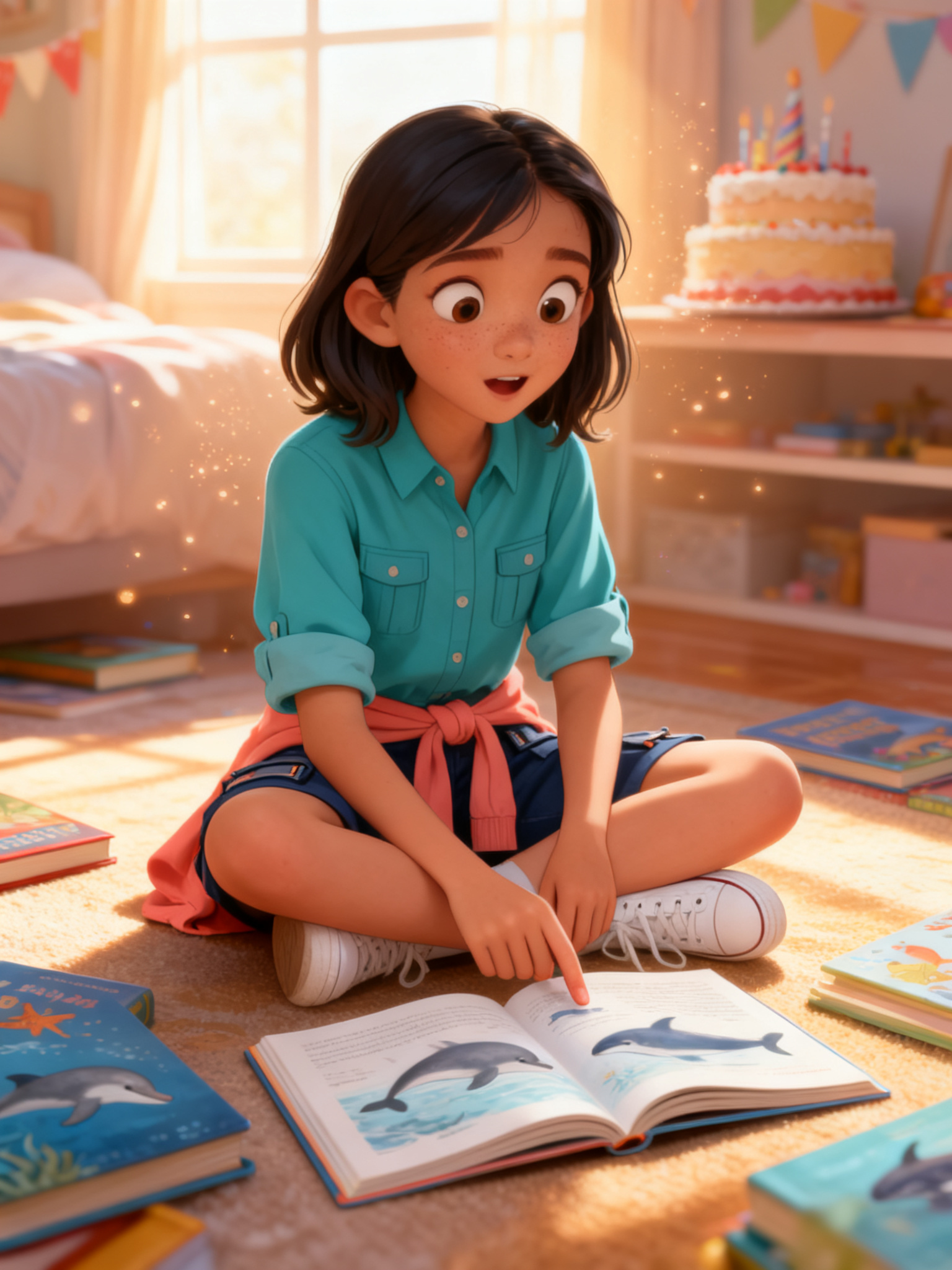
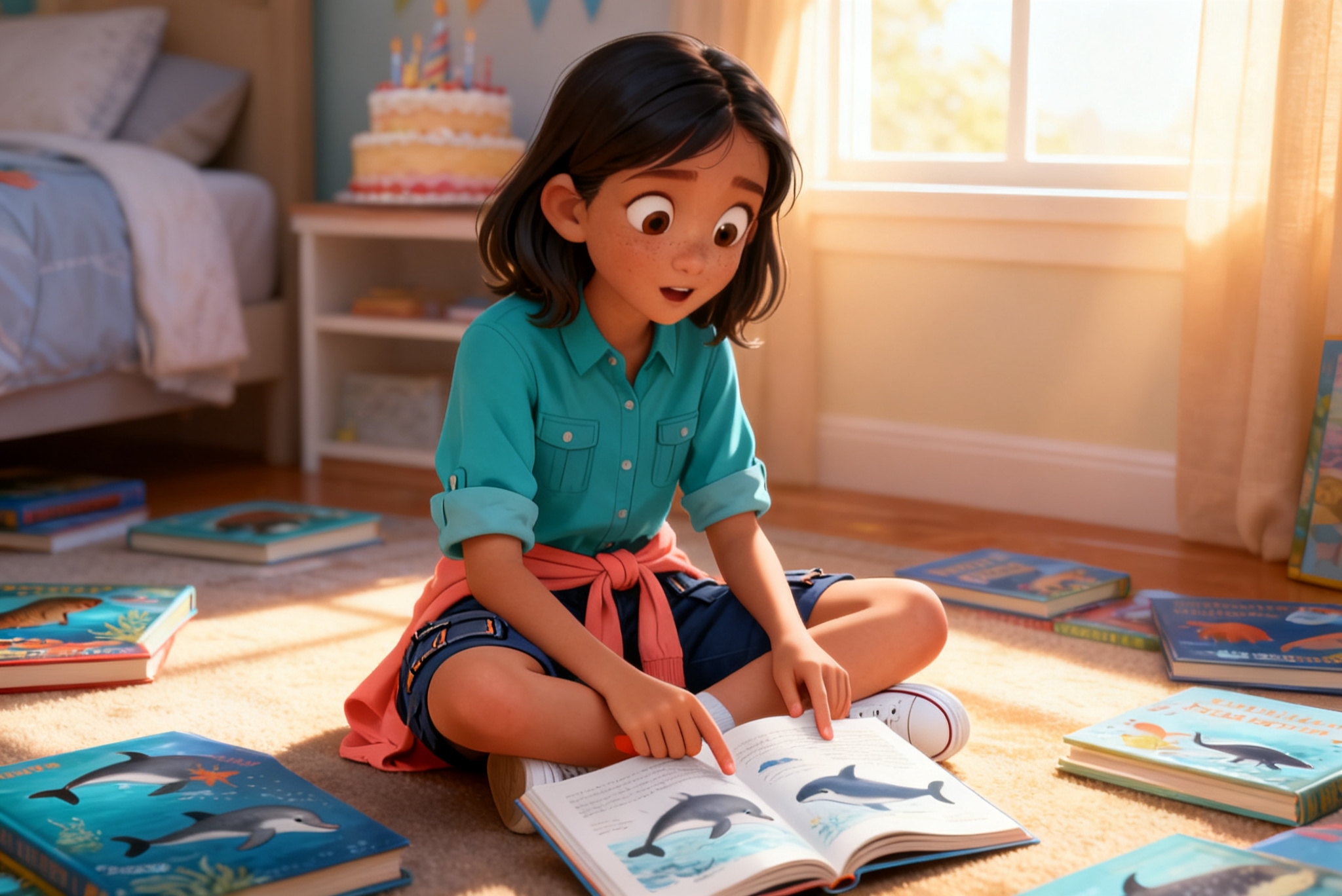
Shreya turned ten on a Tuesday, and her grandmother gave her a book about ocean creatures. She flipped through pages of dolphins, seahorses, and giant squids, but one animal stopped her cold: the sperm whale. Shreya read that these whales dive deeper than any other whale, chasing squid in the darkest part of the ocean. 'How do they find anything down there?' she whispered to herself.
Page 1
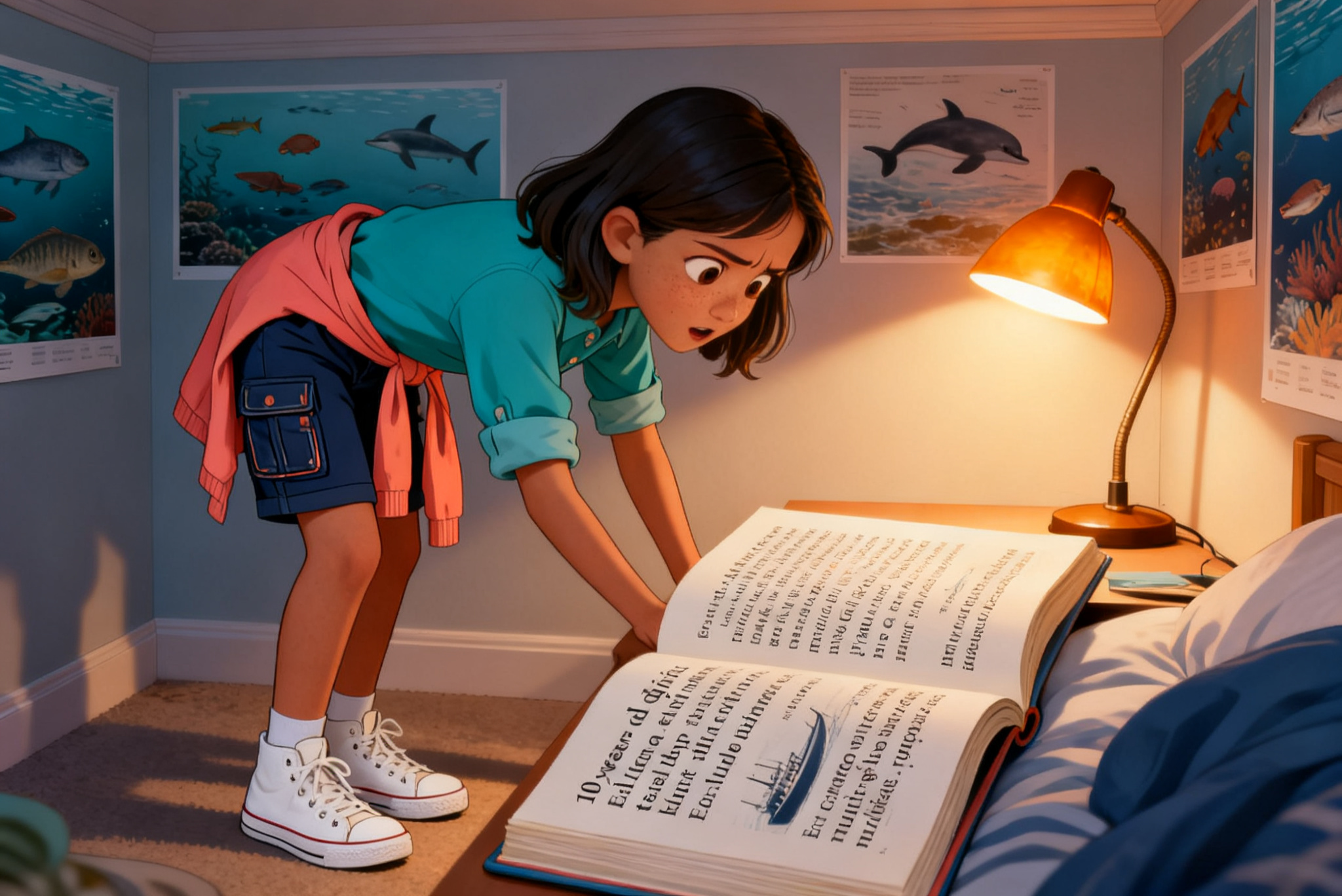
She kept reading. The sperm whale doesn't use its eyes in the dark—it uses clicks. Thousands of tiny echolocation clicks bounce off squid and fish, painting a sound-picture of the ocean. But then Shreya found a sentence that made her frown: *Loud boat engines are drowning out these clicks.* The words sat on the page like a mystery waiting to be solved.
Page 2
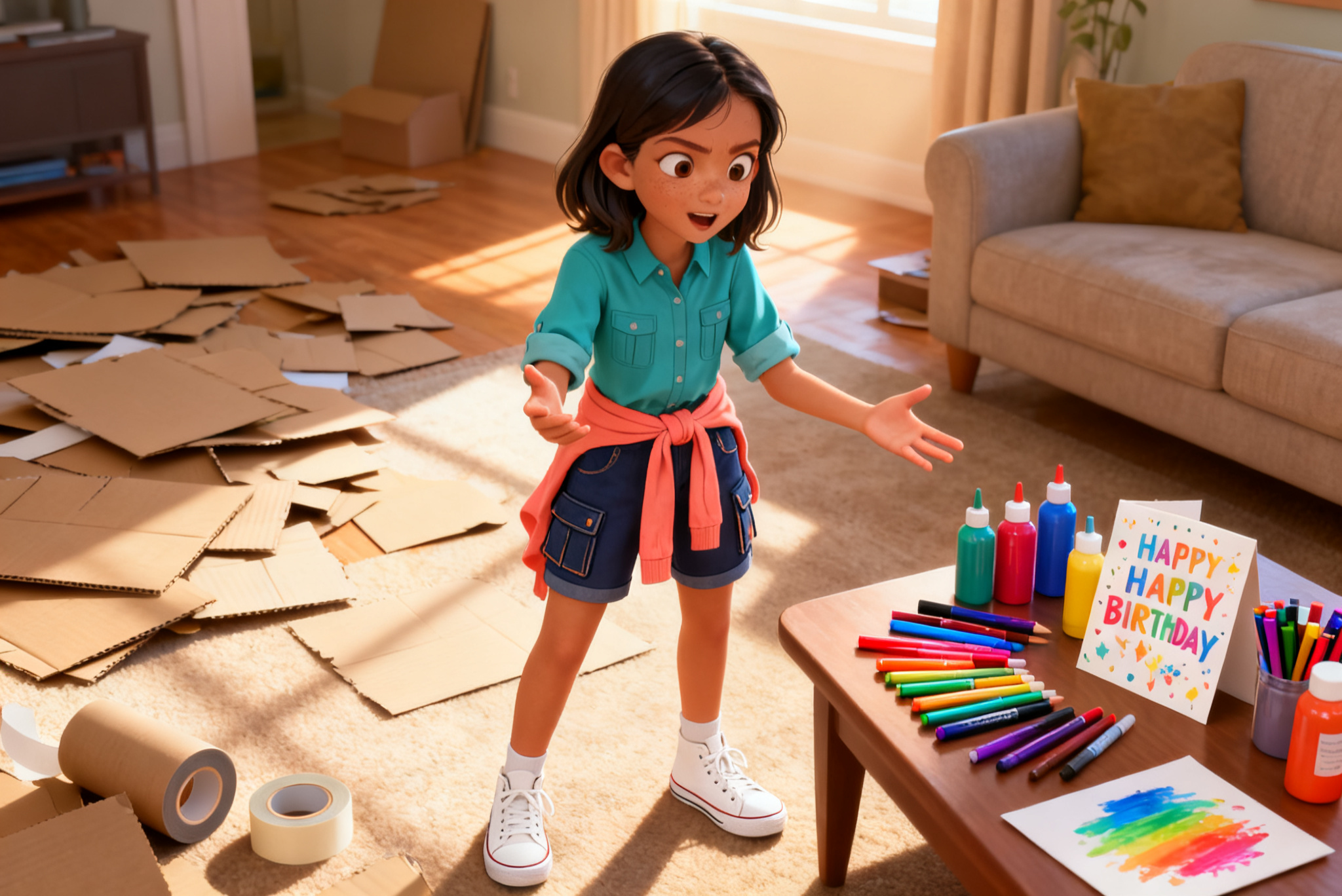
Shreya couldn't stop thinking about it. A mother whale trying to call her calf, but the calf couldn't hear over the roar of a ship's engine. A baby whale lost in the noise. That afternoon, she gathered cardboard, tape, markers, and paint. Her birthday wish was forming—not a gift for herself, but a way to show how the whales heard before the boats came.
Page 3
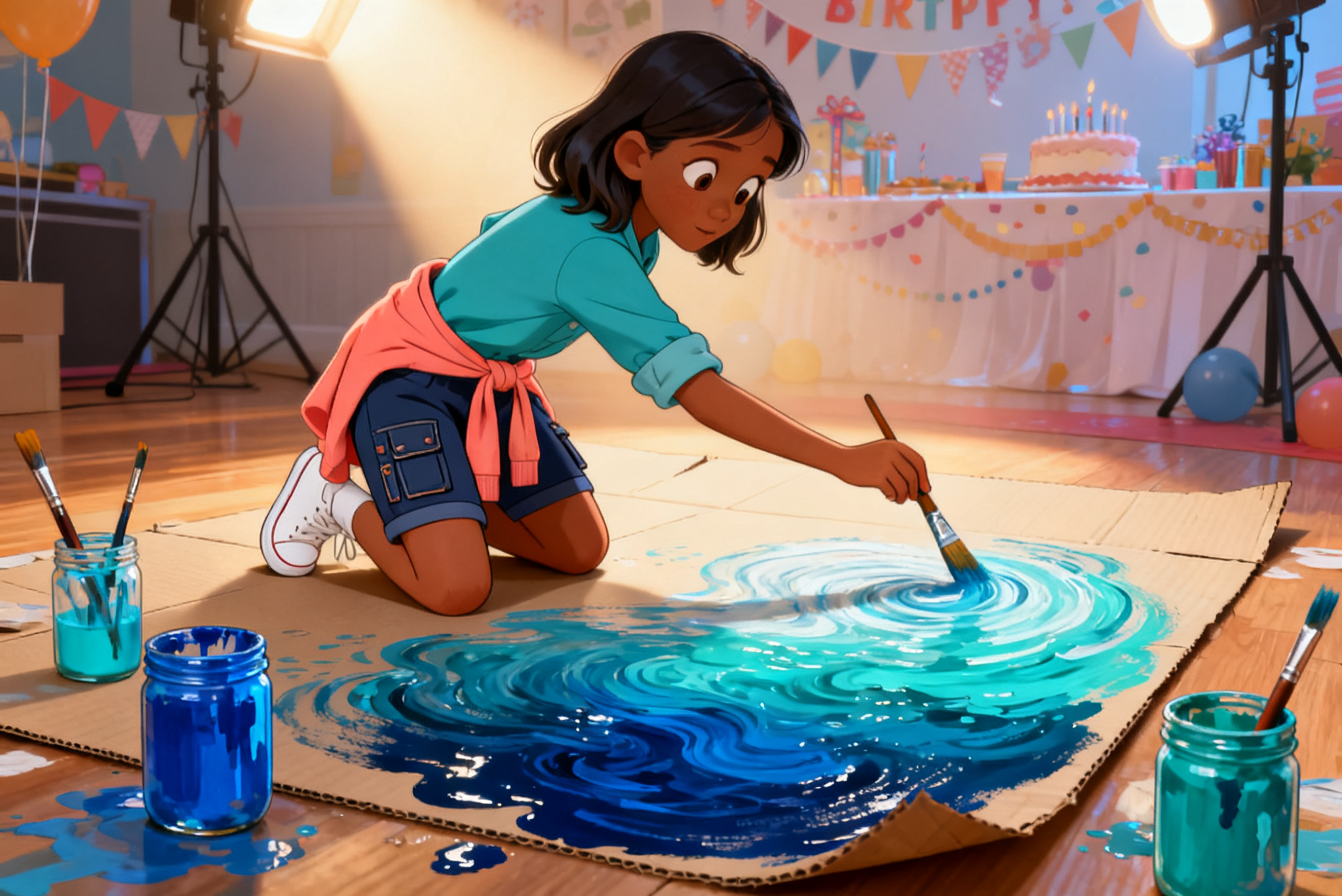
She painted a vast blue ocean across the cardboard, swirling darker blues and teals. The color deepened as it went down, just like the real sea. Shreya imagined the pressure, the cold, the endless night of the deep. Her brush moved with purpose. This wasn't just decoration—it was a window into a whale's world.
Page 4
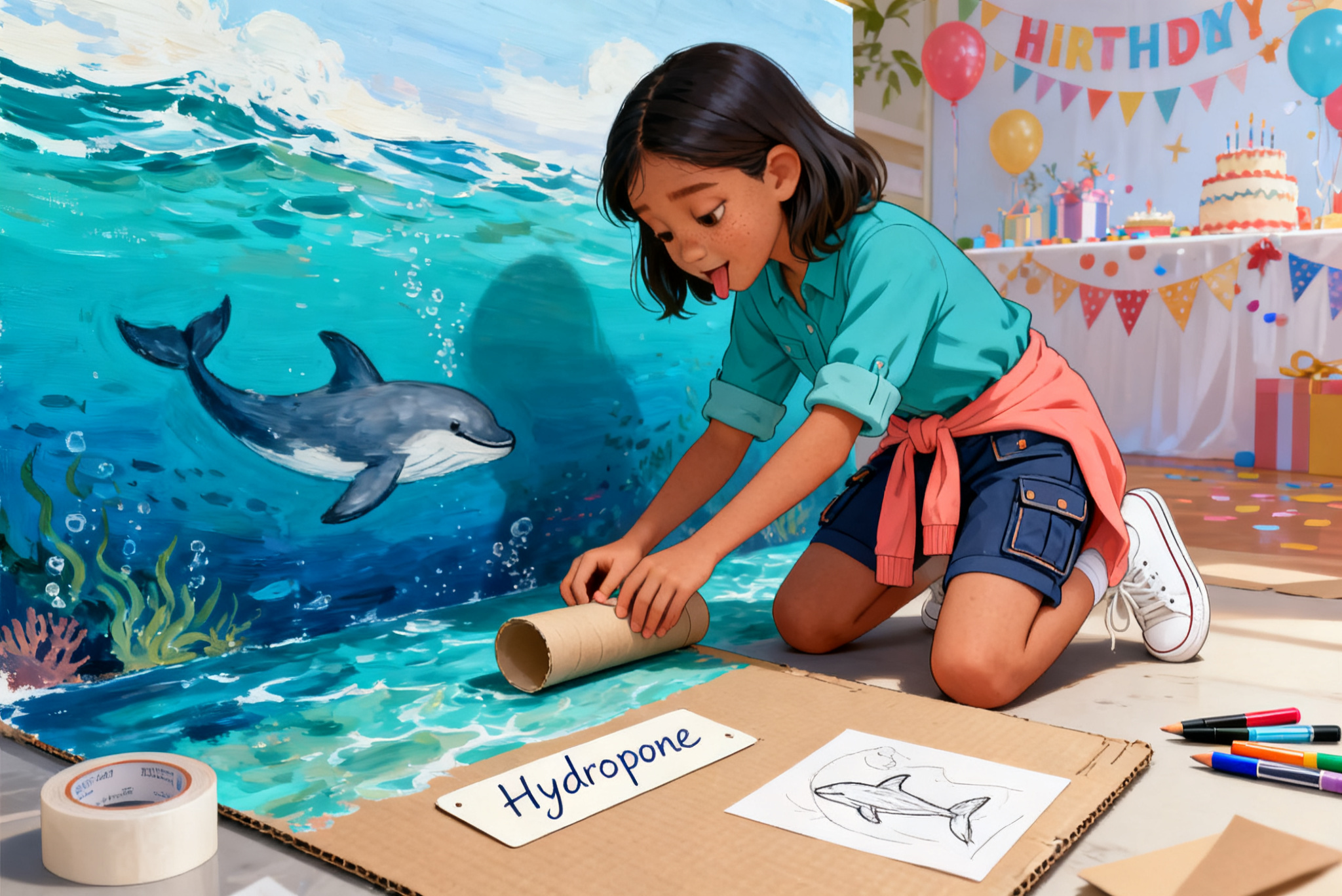
Inside the painted ocean, Shreya taped a paper tube—her hydrophone, a listening device. She'd learned that hydrophones capture underwater sound, just like ears capture air. She labeled it carefully: *Hydrophone—hears whale clicks.* Now she drew a sperm whale diving down, its mouth open, clicks rippling outward in tiny circles.
Page 5
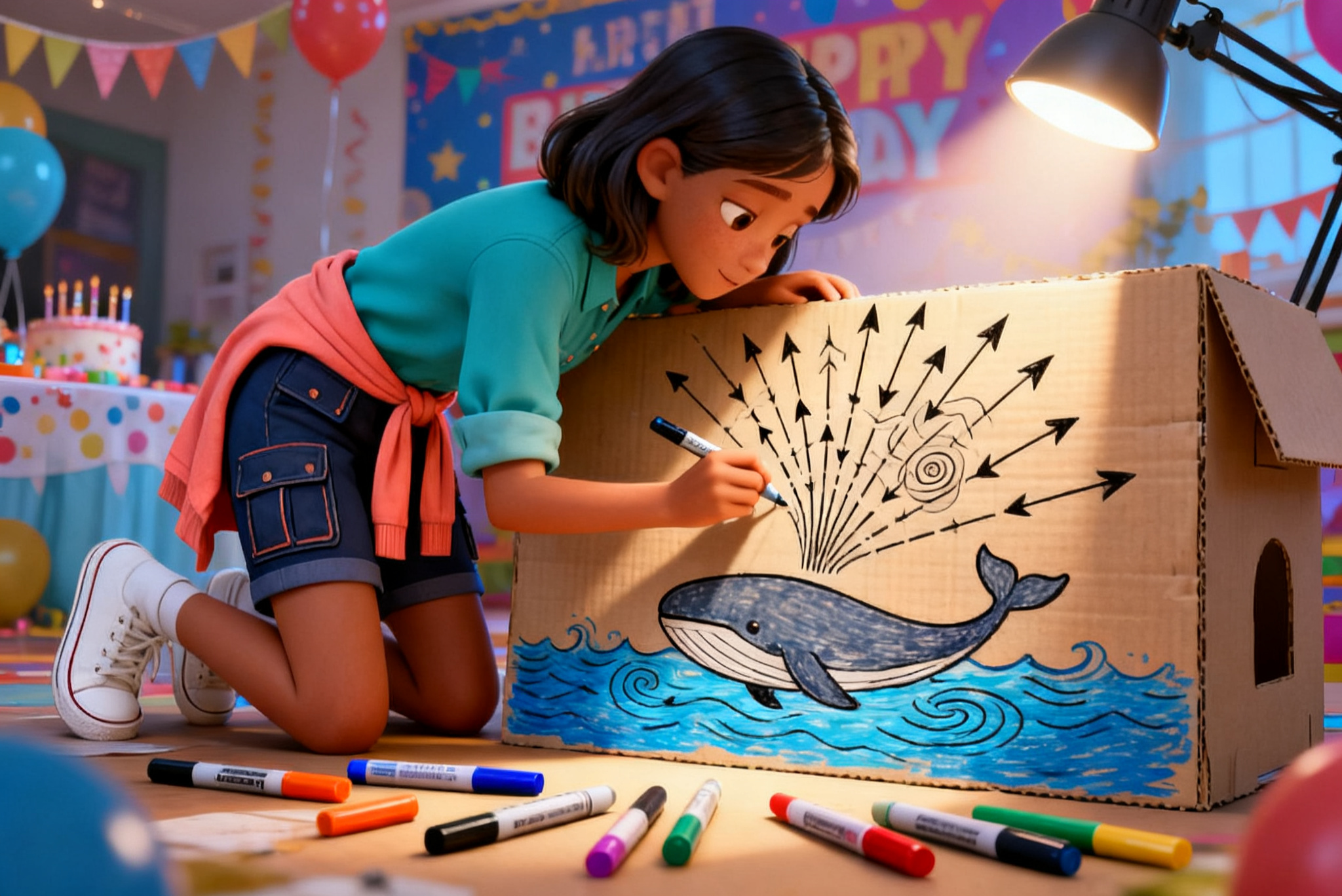
From the whale's clicks, Shreya drew arrow after arrow, traveling upward through the blue, showing how sound travels. Each arrow was a call from a mother whale to her calf. The arrows spiraled, crisscrossed, filled the space with invisible connection. She used her finest marker, concentrating hard. This was the language the whale spoke.
Page 6
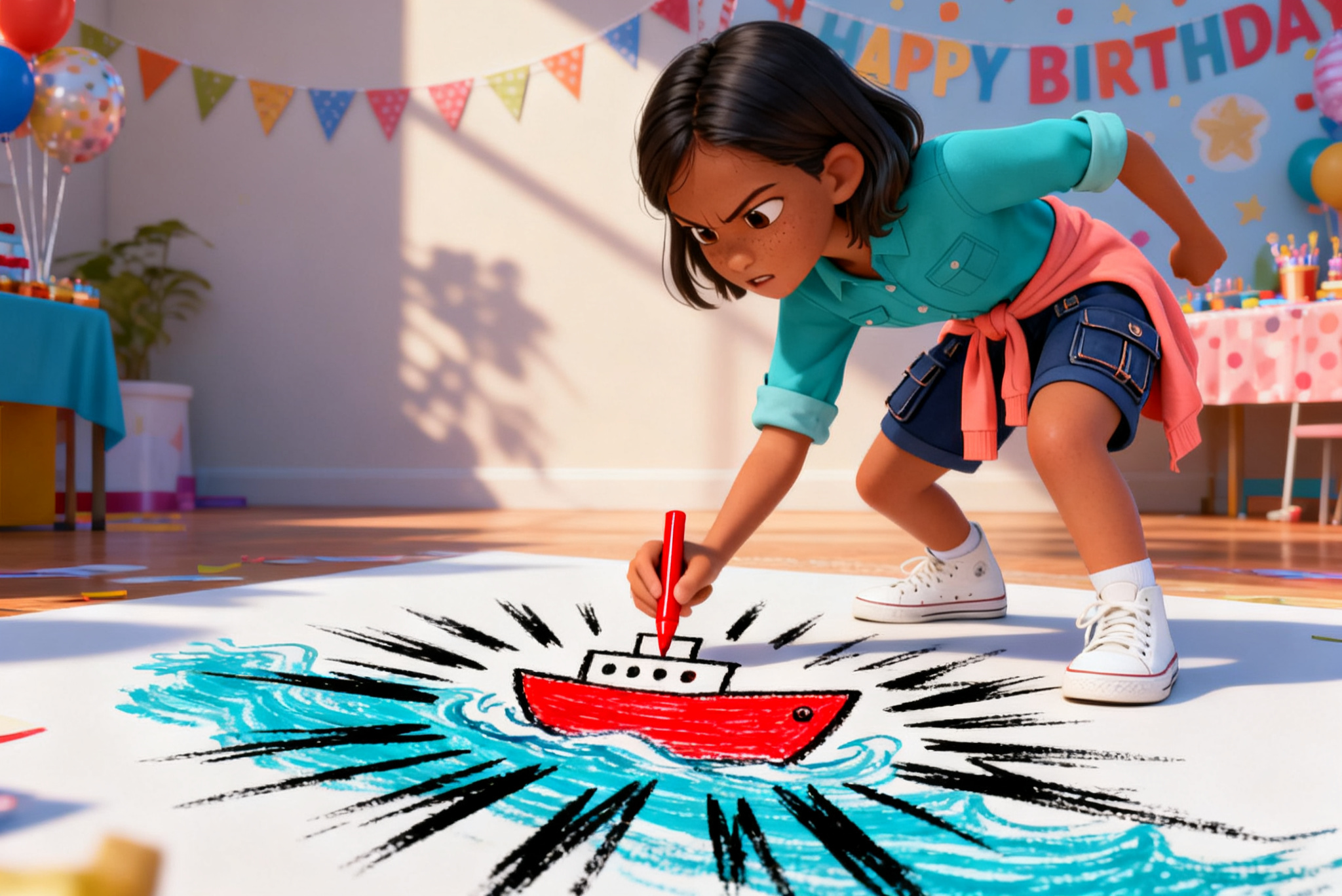
Then she drew a red boat on the surface, its engine dark and heavy. She sketched angry black lines around it—the noise, the pollution of sound. The red boat looked wrong against the gentle blue, like a scar. Shreya felt a little angry too, drawing it. But anger wasn't the answer. Understanding was.
Page 7
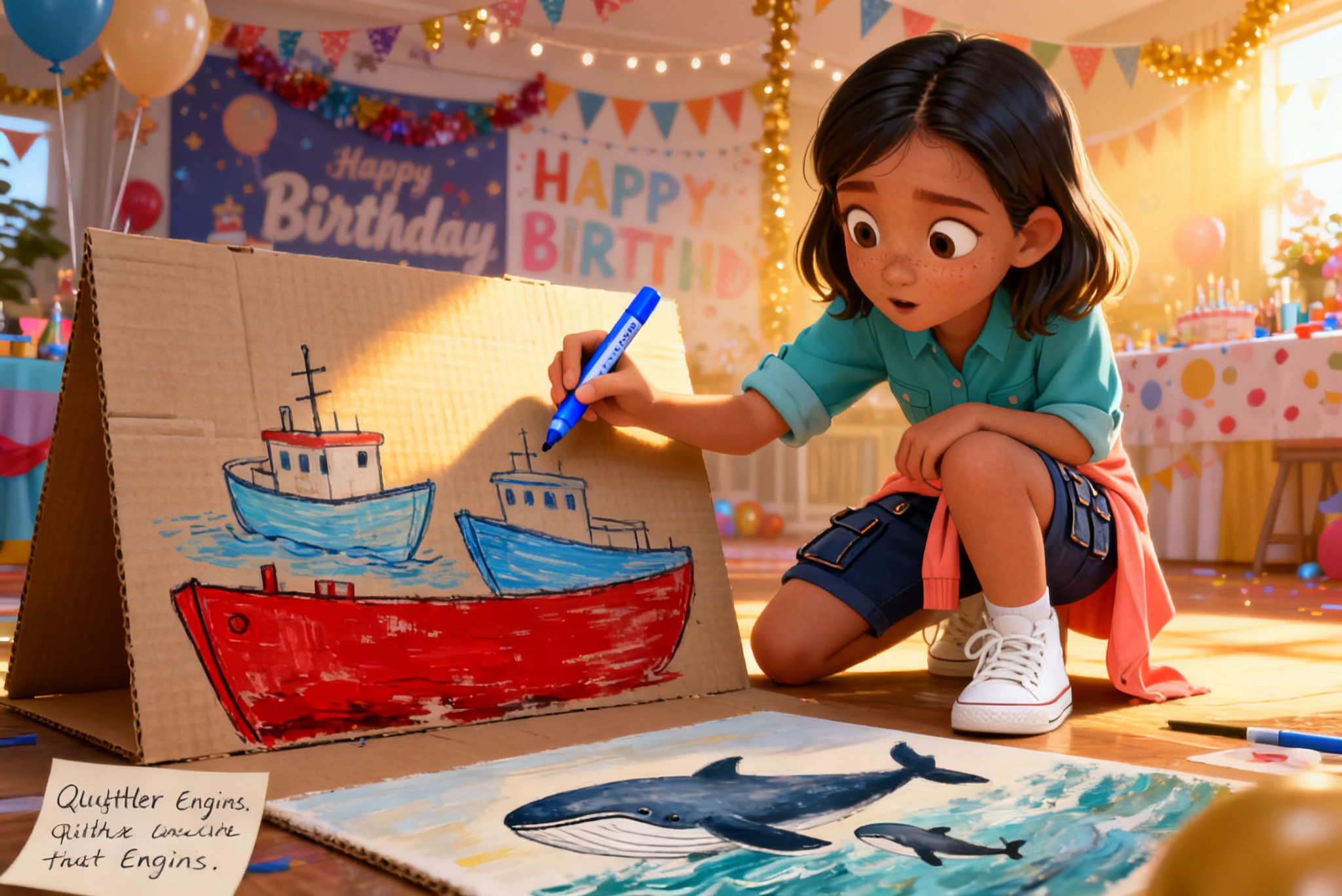
She added a second image: the same whale, the same calf, but this time a *blue* boat with a note beside it: *Quieter engines let whales hear each other again.* The difference was small on paper, but Shreya knew it mattered. One boat was louder than a jet engine. One boat was almost whisper-quiet by comparison.
Page 8
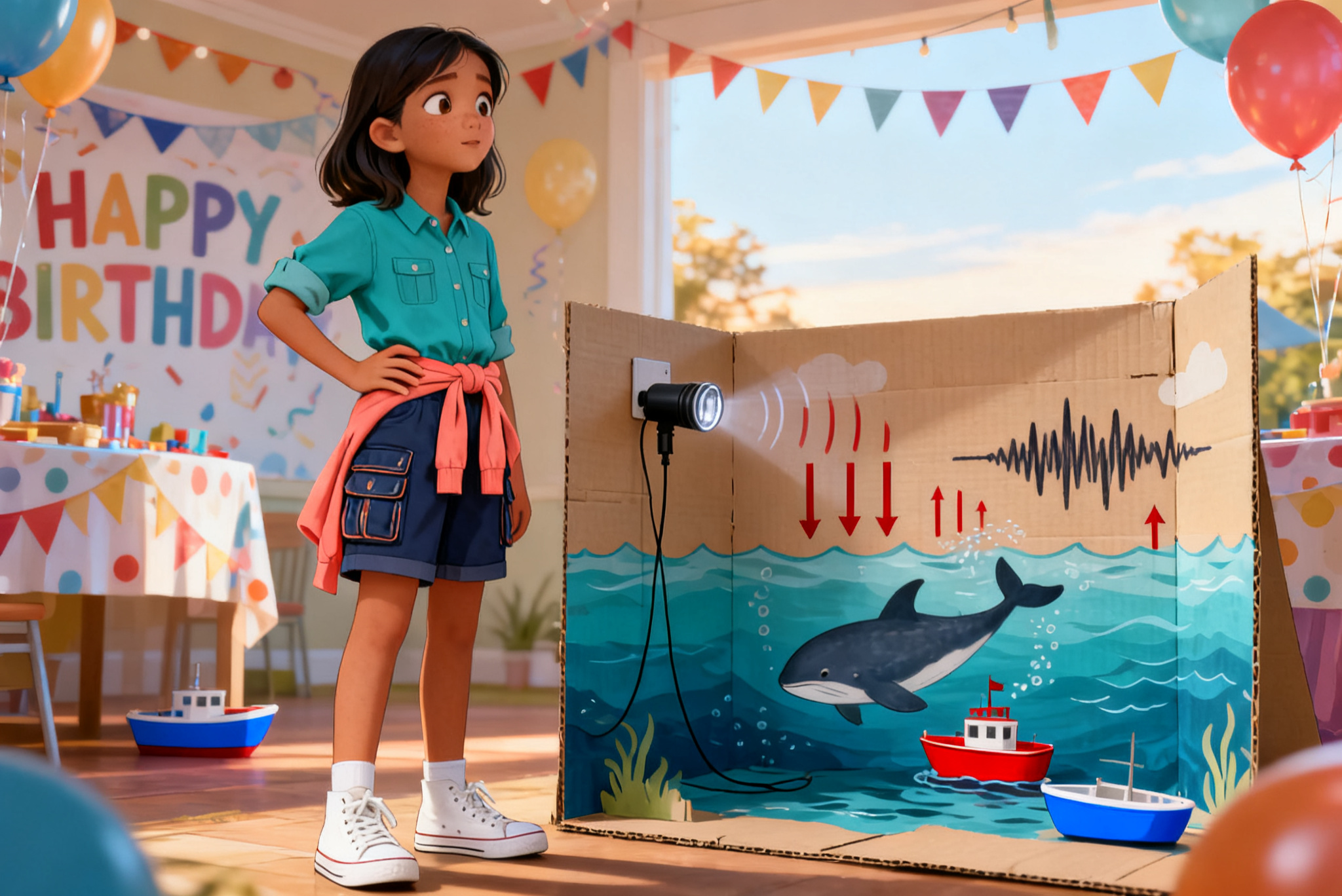
Shreya stepped back and looked at her cardboard world. The hydrophone inside would never actually catch whale sounds—she wasn't pretending it would. But it showed how it *could* work, how someone *could* listen. It was a diagram, yes, but it was also a wish: that humans would learn to listen too, before the whales forgot how to call.
Page 9
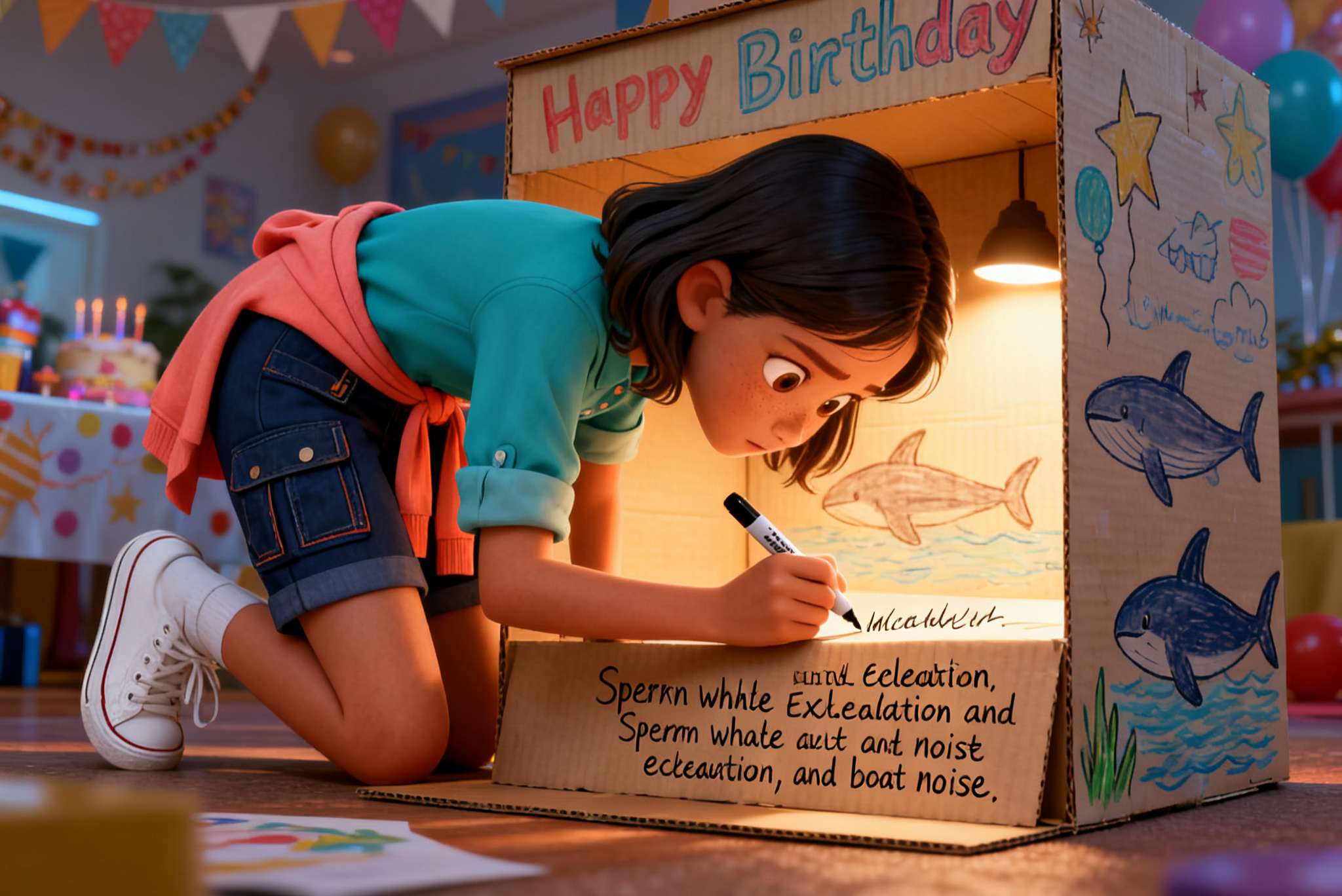
She wrote a final note at the bottom: *Sperm whales use thousands of clicks to find food and talk to their families in the deepest ocean. But boat engines are so loud, the whales have to change their natural calls. Quieter ships help whales stay connected.* It was her birthday gift to the world—a small push toward understanding.
Page 10
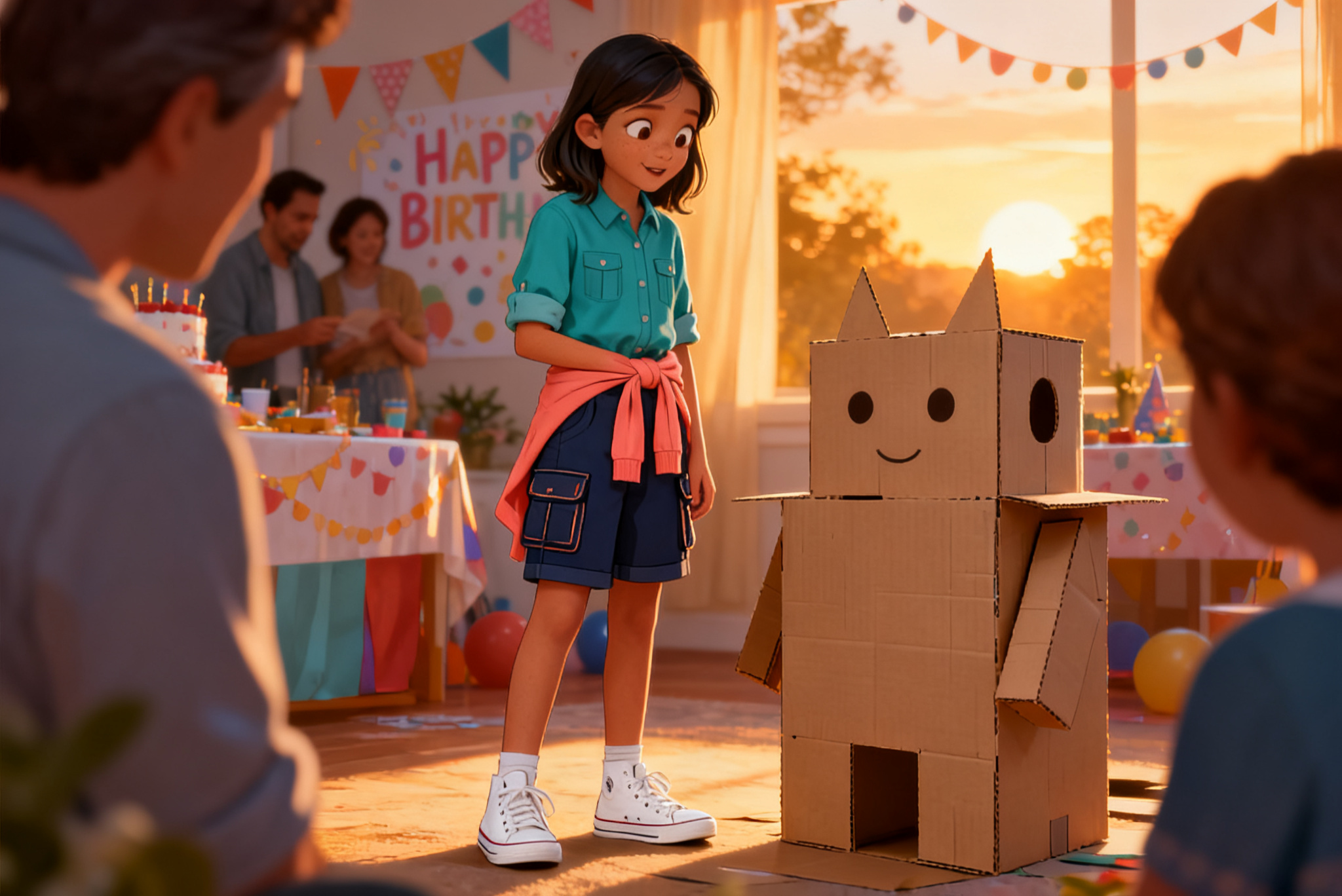
That evening, Shreya's family gathered around her cardboard creation. Her parents read her note. Her grandmother smiled and said, 'You've made something that helps people *see* what whales hear.' Shreya felt warm inside. She hadn't saved the ocean—not yet—but she'd shown one path forward: listen first, then act.
Page 11
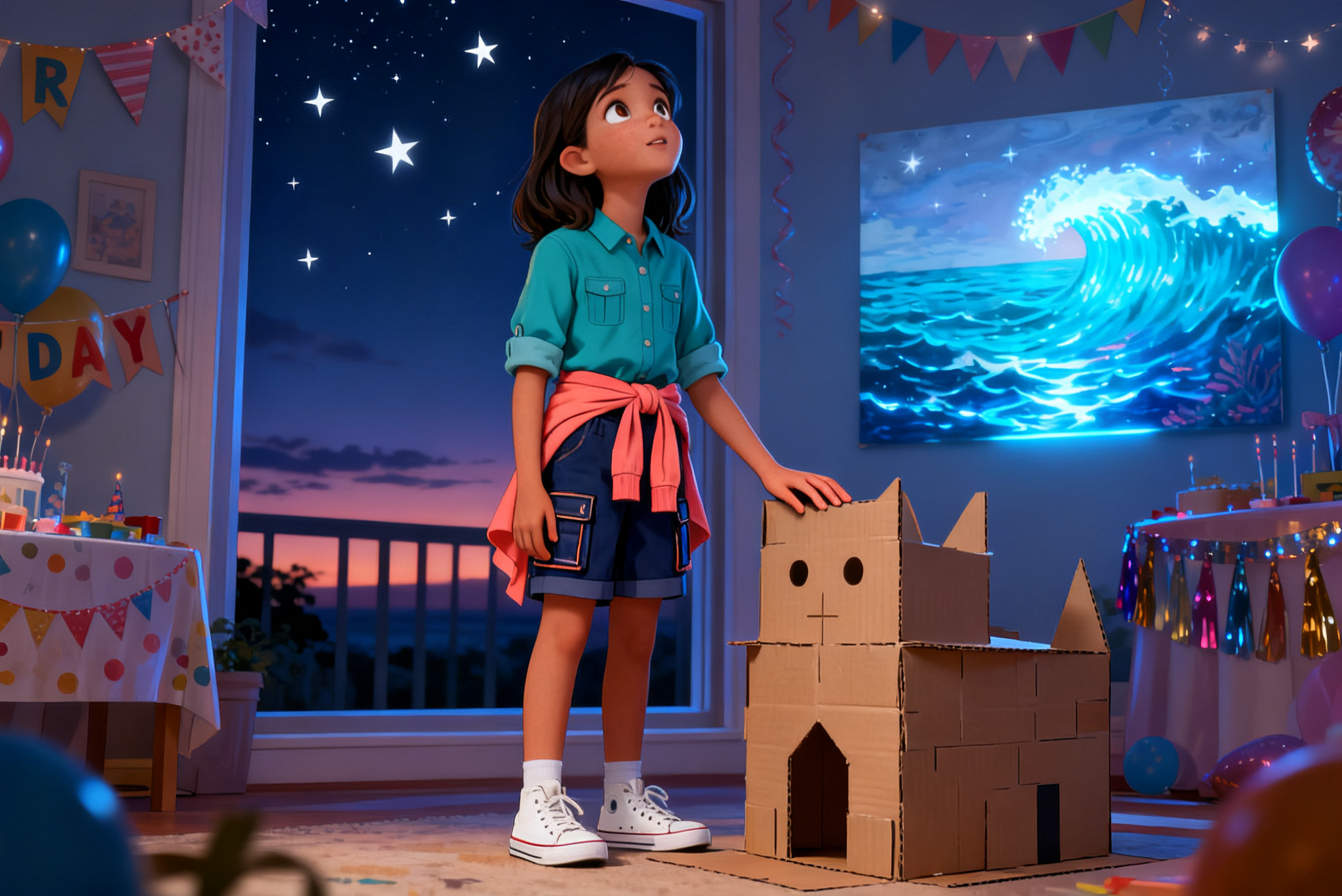
As she turned ten, Shreya understood something bigger than birthdays. The world held mysteries that needed curious eyes and kind hearts. A sperm whale, miles below the surface, clicked and clicked, hoping someone would listen. And now, because of a girl with cardboard and paint, a little more of the world was listening back.
Page 12